
One thing I love doing when traveling to a new country is visiting the ancient towns, traditional palaces, and old and new buildings. As architecture and culture are interdependent and inseparable, architecture is part of the identity of each community and carries the message of the culture of that society. Exploring architecture is a great way to learn about their history, culture, and social values.
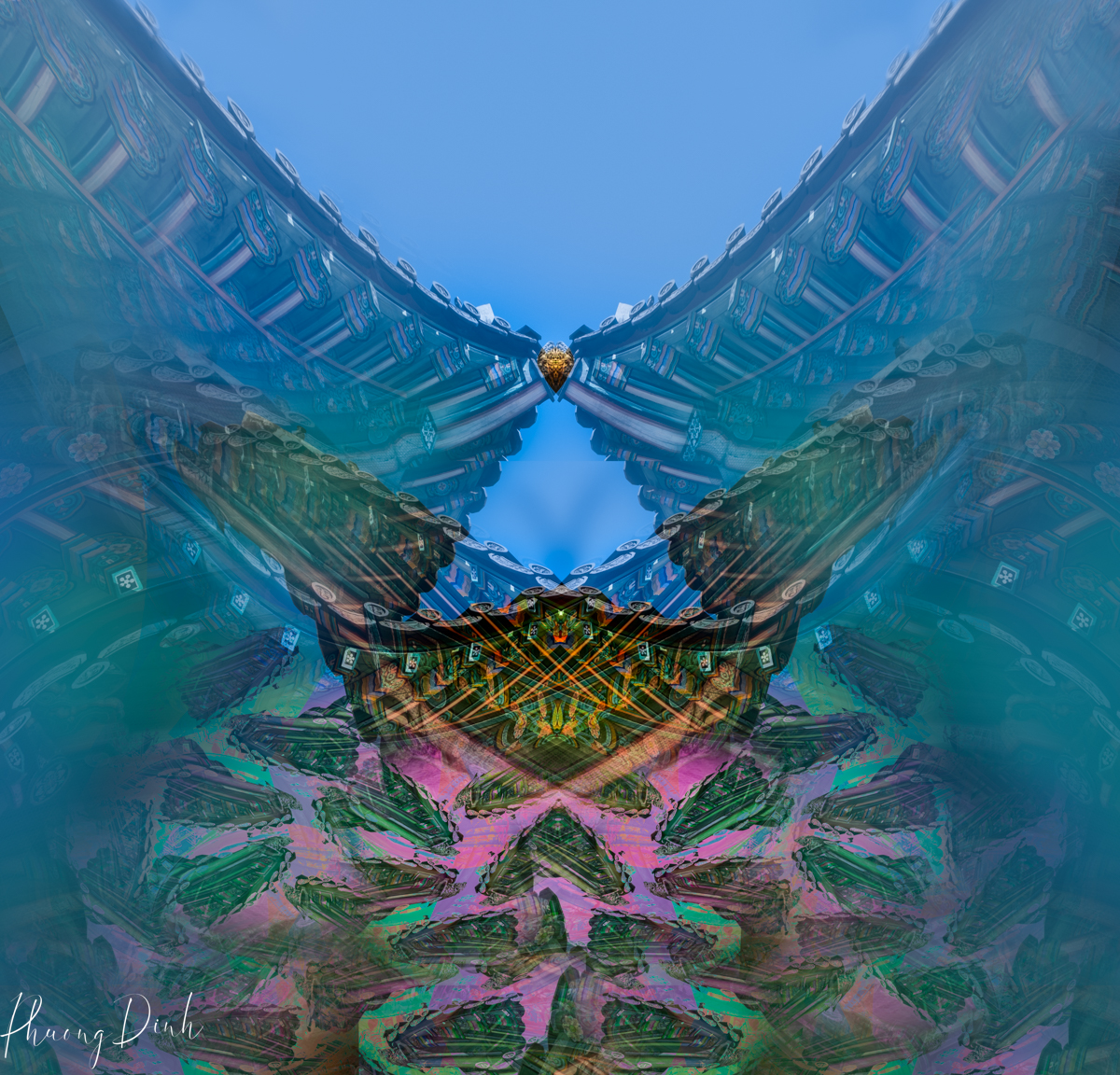
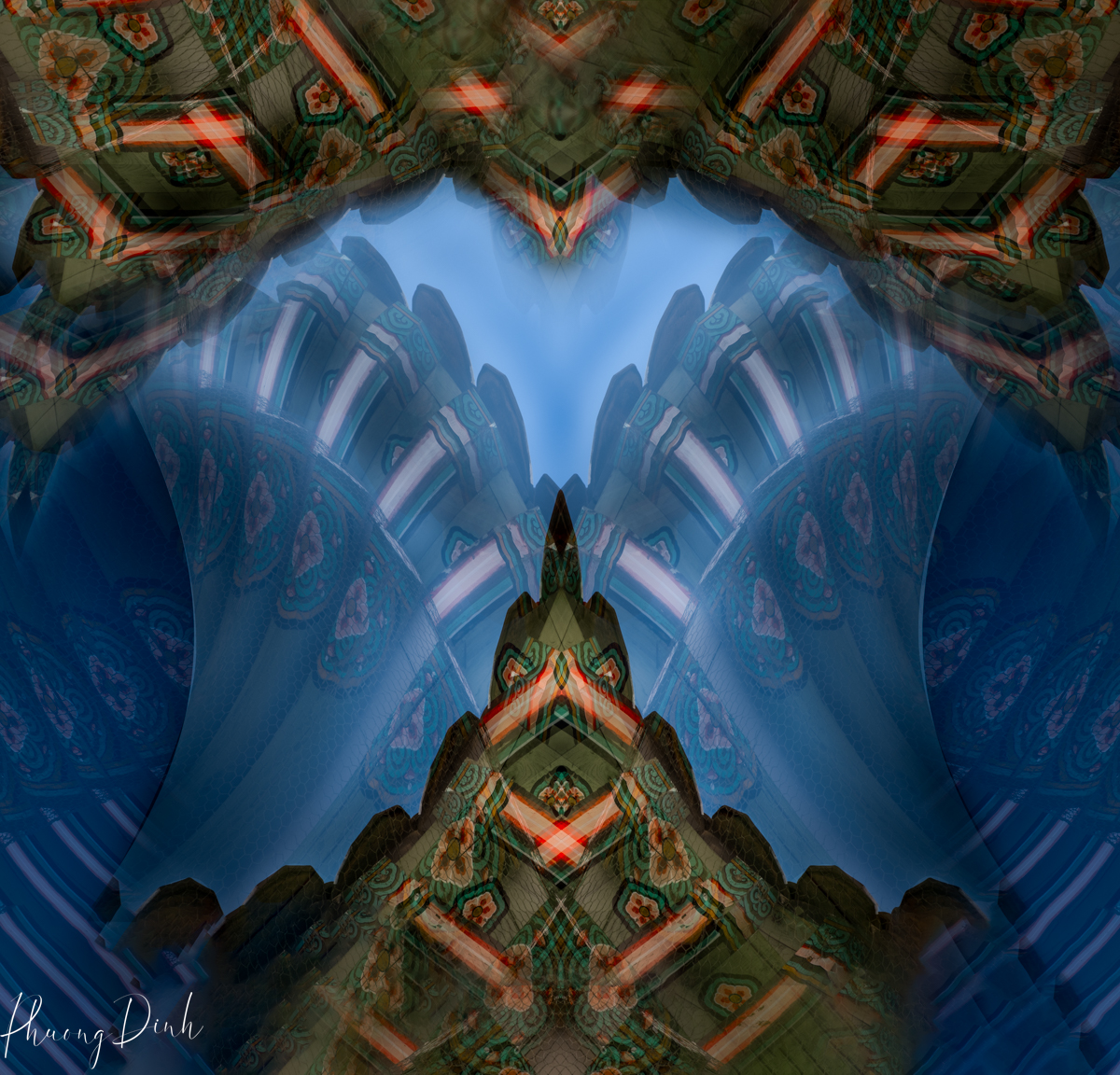
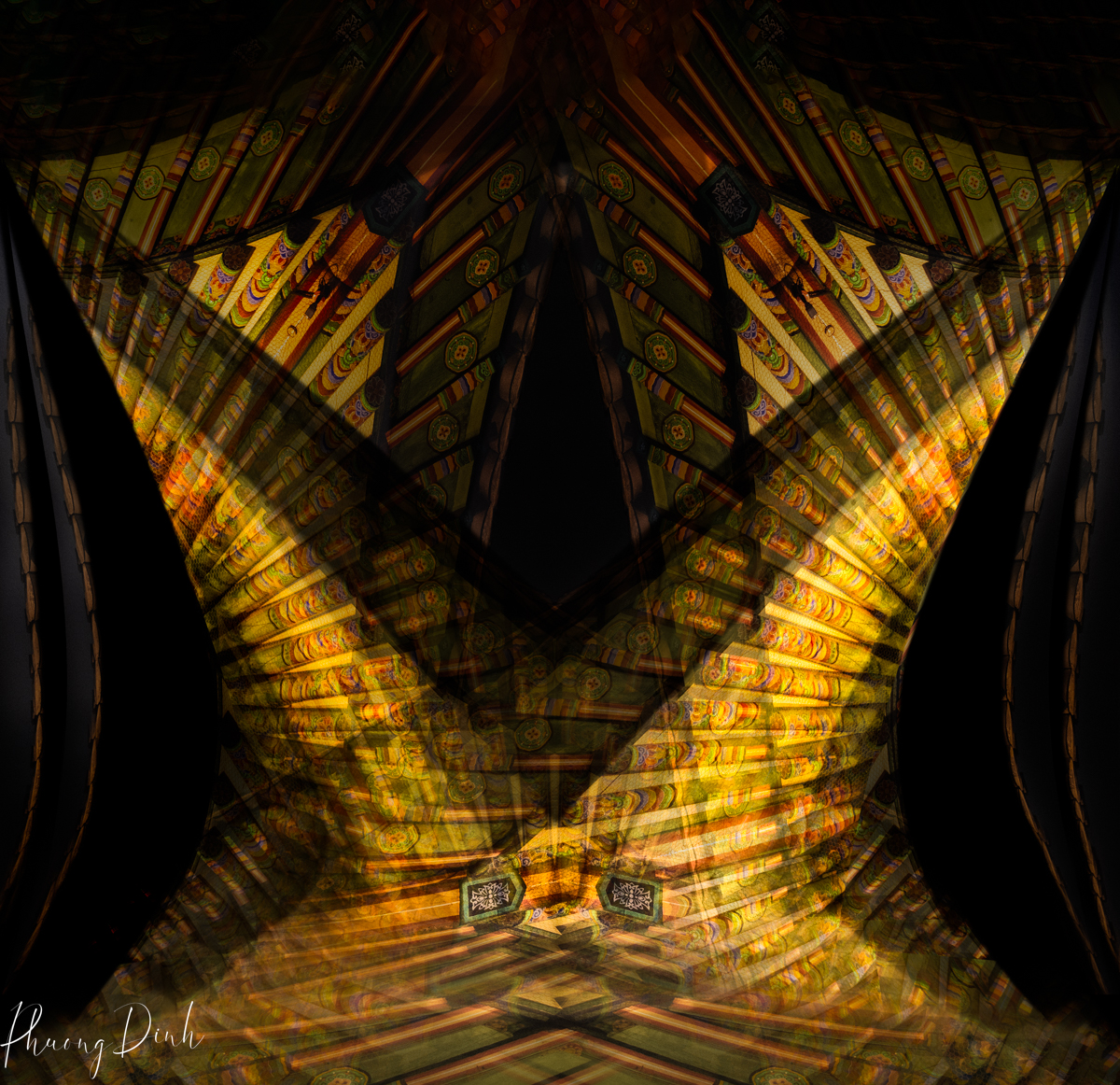
This series of six images are created from photographs of different “gaewa” – traditional Korean palace roof – taken at five royal palaces located at the heart of Seoul during my recent trip to Korea. I was fascinated by the unique and bright multi-colored decorative painting beneath the roofs. Strong red and blue-green colors are used in harmony with yellow, black, and white, which makes these roofs stand out and absolutely stunning when they are illuminated at night. The use of five colors reflects the yin and yang principle and the five elements of fire, water, wood, metal, and earth. The painting not only had a decorative function but also a protective purpose, preserving the building’s wood from rotting due to wind, rain, and vermin. The vibrant and bright colors were also believed to protect the buildings from evil spirits and emphasize the authority of its resident.
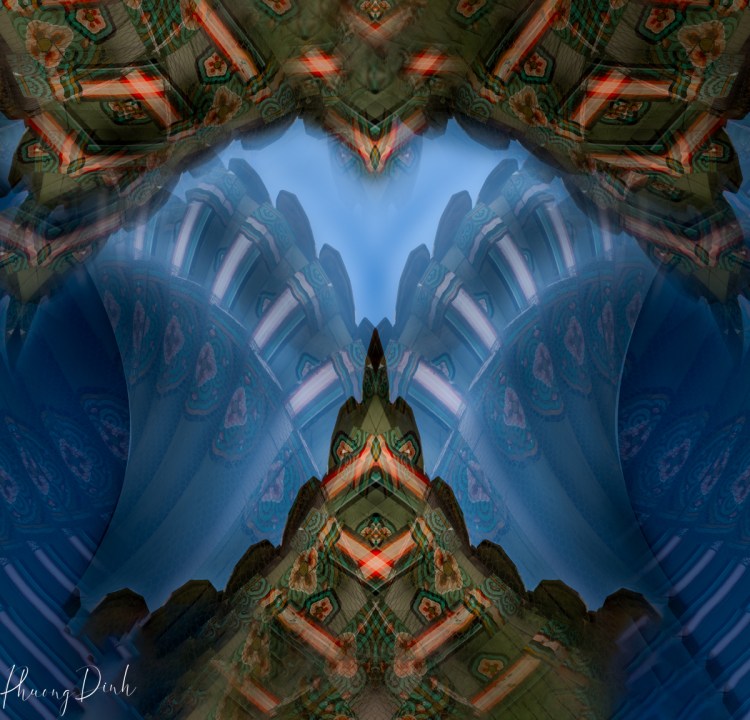
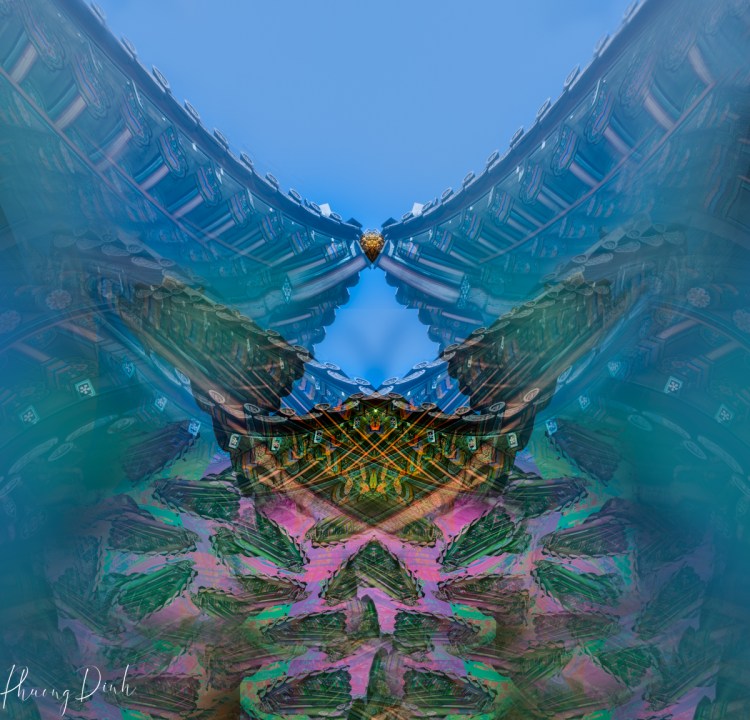
With many curved lines from tree trunks to waves, nature is traditionally considered as model for architecture, items, and even clothing in many Asian countries including Korea. Therefore, in traditional architecture and clothing, curved lines are clearly visible. Most of the roofs at these royal palaces have slightly raised edges whose purpose is to let in sunlight in winter and protect the interior from the summer sun. The roof curves inwards to prevent rainwater from being trapped or the tiles from slipping off. In addition to naturally curved lines, national symbols, and patterns of flowers and animals are also widely incorporated in Asian traditional buildings. As for clothing, curving lines are also found in the collars, underneath the sleeves of the upper garment, and skirt-like undergarments resulting from movement in Korean traditional clothing.
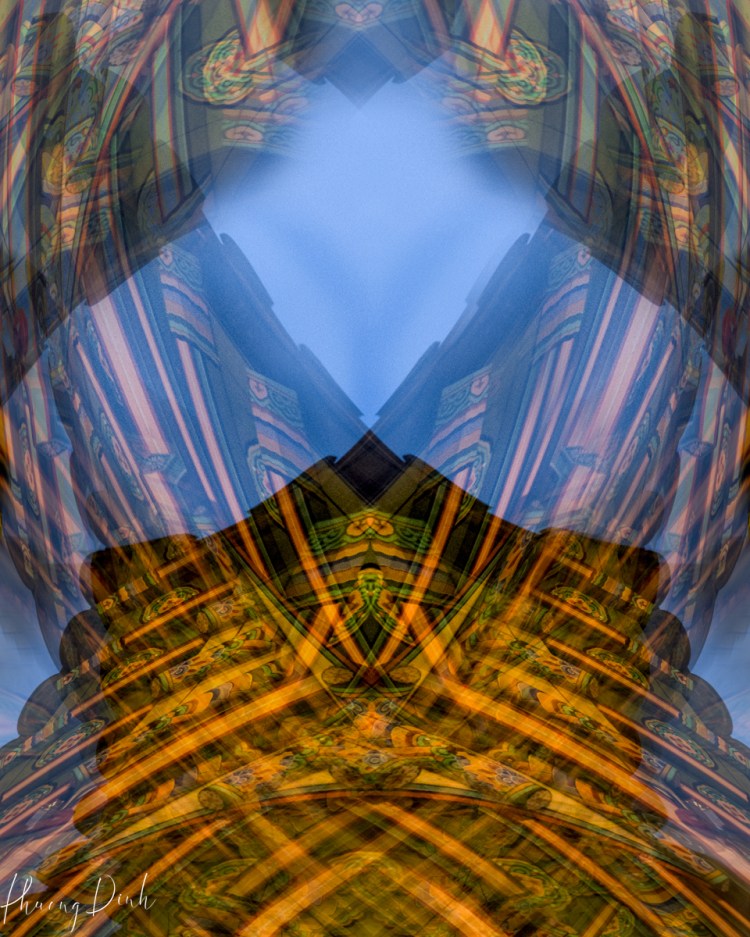
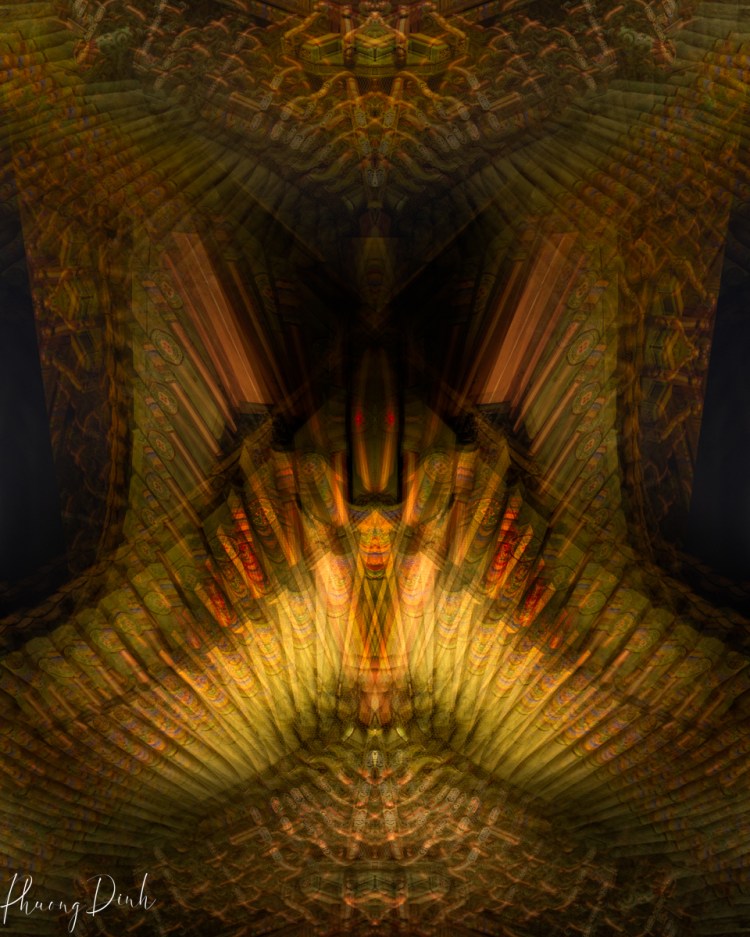
When wandering in these 14th-century built palaces, I was imagining what life was like 600 years ago. What kind of activities were held? How food was cooked and served? How dances and music were performed? Especially, how people dressed at that time. When going through all photographs taken during that trip a couple of months later, my mind started wandering again. The decoratively multi-colored painted roofs look like a piece of fabric to me. I wondered if the same symbols, decorative motifs, and patterns were also traditionally used on fabrics. I asked myself what it would look like if I make dresses from these beautiful “fabrics” floating on my computer screen. I was not creating clothing that looks exactly like Korean traditional Hanbok, but rather letting my imagination flow freely as I was putting pieces of fabric together. I tried to replicate the natural curves, shapes, and lines while accentuating the raised edges and inward curves in order to transform the rigid wooden roof into a delicate, gracious, and fluid dress.
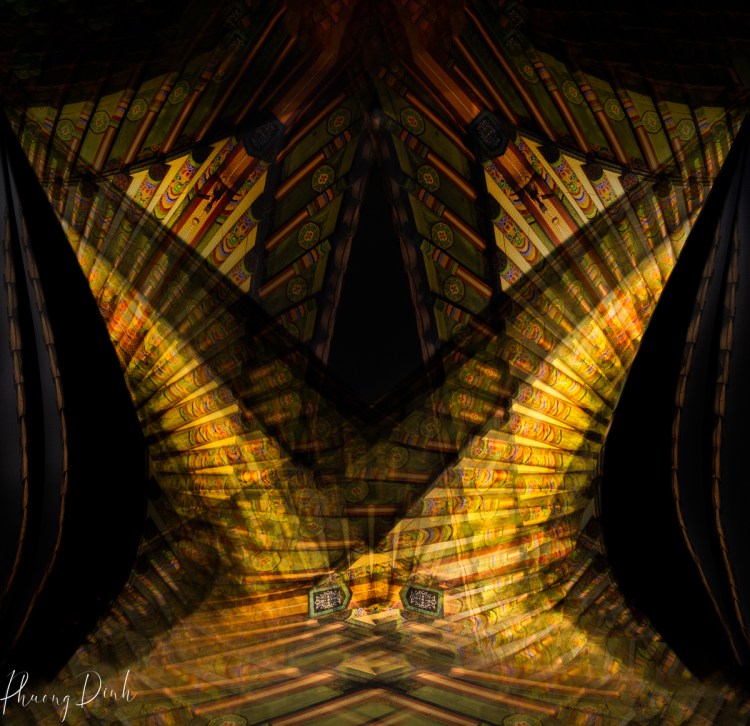

Basic techniques in Photoshop such as duplicating, transforming, and flipping the image horizontally and vertically were used as tape measure, seam ripper, thread, scissors, and sewing needles to put together six dresses for different occasions. In the end, curve adjustment was used to enhance light and shadow in order to define the final shape of the dresses. Each “dress” is created from only one image of a particular roof. All the inner-wear, overcoat, and accessories were created from the decorations on the same roof used to create that dress. To me, this series of images is a short movie of a royal life that reappeared through my imaginative dresses.


Subscribe to stay informed about blog updates and new print releases. All email addresses are kept strictly confidential and will not be disclosed to third parties.
© 2023 Copyright Phuong Dinh. All rights reserved.
Discover more from Phuong Dinh
Subscribe to get the latest posts sent to your email.
 Phuong Dinh